
The Rational, COAST-Based Approach to Osteoarthritis, From First Signs to Advanced Pain Control
Arthritis in dogs explained by a board-certified veterinary anesthesiologist and pain specialist: the five COAST stages of osteoarthritis in dogs, what to add at each stage, where CBD and NSAIDs fit in anti-inflammatory care, and why starting early matters most.
In This Article
- 1. Why Arthritis in Dogs Starts Earlier Than You Think
- 2. What Are the Stages of Arthritis in Dogs? The COAST Framework
- 3. Stage 0 and Stage 1: Protect Cartilage, Manage Weight, Keep Dogs Moving
- 4. Stage 2: Every Dog Deserves an Anti-Inflammatory Plan
- 5. Stage 3: The Immune System, the Nervous System, and Joint Lubrication
- 6. Stage 4: Preserve Muscle and Control Pain Perception
- 7. Joint Injections: Options at Any Stage
- 8. Putting It Together: A Stage-by-Stage Summary
- 9. How Peak Therapeutics Fits Into a Stage-Based Plan
- 10. Frequently Asked Questions
- 11. References
- 12. About Dr. James S. Gaynor, DVM, MS, DACVAA
Key Takeaways
- Arthritis in dogs often starts young: in a 2024 study of dogs aged 8 months to 4 years, 39.8% had radiographic osteoarthritis, and owners recognized signs in only about 30% of the dogs that had them.
- Veterinarians stage osteoarthritis in dogs with the Canine OsteoArthritis Staging Tool (COAST), from Stage 0 (clinically normal) to Stage 4 (severe), and care is additive: each stage keeps everything from the stage before it.
- Stages 0 and 1: focus on cartilage protection, omega-3 EPA, weight management, and consistent activity; for example, in obese dogs with hip or elbow osteoarthritis, lameness improved after about 6% weight loss.
- From Stage 2: every dog deserves an anti-inflammatory plan: NSAIDs have the deepest evidence base, while CBD has growing evidence and a favorable safety profile, and an anti-NGF antibody such as Librela may be best paired with an anti-inflammatory.
- Stages 3 and 4: add support for the immune component (UC-II), central sensitization (amantadine), joint lubrication (high molecular weight hyaluronic acid), muscle preservation, and pain perception; however, tramadol is no longer recommended for osteoarthritis pain.
Quick Answer: What Is the Best Way to Manage Arthritis in Dogs?
The best way to manage arthritis in dogs is to stage it, then match care to the stage. Specifically, veterinarians use the Canine OsteoArthritis Staging Tool (COAST) to rate dogs from Stage 0 to Stage 4. In general, early stages focus on cartilage, omega-3s, weight, and activity. From Stage 2, every dog needs an anti-inflammatory plan, such as CBD or an NSAID, and later stages add nerve, joint-lubrication, and muscle support.
Arthritis is the most common source of chronic, maladaptive pain I see in dogs, and it is also one of the most undertreated. Most owners picture it as a disease of old age. However, the data say otherwise. In a 2024 study of dogs between 8 months and 4 years old, nearly 40% already had radiographic osteoarthritis in at least one limb joint, and most of their owners had not noticed anything wrong.1
Over three decades of practicing anesthesia and pain management, I have come to treat arthritis the way I would want my own joints treated: logically, early, and in layers. With this in mind, this guide walks through that approach. It is built on the Canine OsteoArthritis Staging Tool (COAST), developed by an international group of veterinary orthopedic and pain specialists,2,3 and it is the same framework I teach to veterinarians. I have written it for dog owners as well as for the veterinarians who advise them.
A note on how to read this guide
This is an educational overview of how veterinarians approach osteoarthritis. For this reason, I name prescription medications by drug class, and by brand only where no equivalent animal formulation exists in the United States. I have deliberately left out prescription doses; those decisions belong to your veterinarian, who can examine your dog and check bloodwork. Where I discuss Peak Therapeutics products, I describe them as wellness support for joint comfort and mobility, because that is what they are. In other words, they are not approved drugs and are not intended to diagnose, treat, cure, or prevent any disease.
1. Why Arthritis in Dogs Starts Earlier Than You Think
Osteoarthritis in dogs (OA) is a progressive disease of the whole joint, and it often begins in the first few years of life.
Older estimates put arthritis at roughly one in five adult dogs. However, newer work using careful orthopedic exams and radiographs paints a different picture. In the 2024 study above, 39.8% of young dogs had radiographic OA, 23.6% had clinical OA with at least mild pain, and owners recognized signs in only about 30% of the dogs that had them.1 Developmental conditions such as hip and elbow dysplasia, along with injuries like cruciate ligament tears, set the process in motion long before a dog looks old.
In reality, OA is not simply worn-out cartilage. Instead, every structure in the joint is involved: the cartilage, the synovial lining, the joint capsule, and the bone beneath the cartilage. Meanwhile, inflammation, destructive enzymes, and changes in the nerves that carry pain signals all feed one another. Left alone, the joint eventually moves toward end-stage failure. That is why I build every plan around five principles.
- It is often a young dog problem. Many dogs have OA before their second birthday.
- It is also a lifelong problem. OA is managed rather than cured.
- Start treatment early. Every stage is easier to manage than the one after it.
- Keep therapy continuous. By contrast, on-again, off-again treatment lets the disease advance between courses.
- Recheck regularly. Rechecks should become more frequent over time, especially as the disease progresses.
What Are the Signs of Arthritis in Dogs?
Dogs rarely cry out from chronic joint pain. Instead, they adapt, and those adaptations are easy to explain away as “just getting older.” These are the changes I ask owners about.
What You May Notice |
What It Can Mean |
|---|---|
| Slow to rise, stiff after rest | Joint stiffness that eases with movement, a hallmark of early OA |
| Hesitates at stairs, the car, or furniture | Pain or weakness when joints are loaded through a larger range of motion |
| Shorter walks, lagging behind, sitting down on walks | Reduced exercise tolerance, often blamed on age |
| Limping after hard play that resolves by the next day | Intermittent flare-ups, typical of early stages |
| Licking a joint, irritability, less interest in play | Chronic discomfort affecting behavior and quality of life |
| Thinning muscle over the hips or thighs | Disuse from long-standing pain, especially common in later stages |
During the examination, your veterinarian checks for crepitus (a grinding feel in the joint), reduced range of motion, joint swelling, pain on manipulation, and instability. Radiographs help, but they do not necessarily match how much pain a dog feels, which is exactly why clinical staging matters.
2. What Are the Stages of Arthritis in Dogs? The COAST Framework
 The Canine OsteoArthritis Staging Tool (COAST) grades a dog’s osteoarthritis from Stage 0 to Stage 4 by combining what the owner sees at home with what the veterinarian finds on examination.2
COAST was developed by an international panel of veterinary specialists, and in 2023 the same group published consensus treatment guidelines organized by stage.3 Staging does two jobs. It gives you and your veterinarian a common language, and it also tells you what to add next. The principle is simple: stage the dog, treat for that stage, recheck, and stage again. In short: treat and repeat.
The Five COAST Stages of Osteoarthritis in Dogs
COAST Stage |
What It Looks Like |
|---|---|
| Stage 0: Clinically normal | No signs of OA and no known risk factors. |
| Stage 1: At risk | Clinically normal, but risk factors are present, such as a large or giant breed, dysplasia, a prior joint injury, or excess weight. Occasionally, brief lameness may come and go unnoticed. |
| Stage 2: Mild OA | Intermittent signs, often in young adults: stiffness or lameness after activity and occasional flare-ups. Easy to rationalize and ignore. |
| Stage 3: Moderate OA | Persistent signs and growing difficulty with daily activities, often in middle-aged dogs. Exercise tolerance also declines. |
| Stage 4: Severe OA | Loss of mobility, loss of strength and fitness, and pain that is harder to control, usually in older dogs. |
In my approach, care is additive. In other words, each stage keeps everything from the stage before it and adds new layers. Nothing is dropped simply because a dog moves up a stage.
3. Stage 0 and Stage 1: Protect Cartilage, Manage Weight, Keep Dogs Moving
In dogs with no signs yet, or with risk factors only, the goal is to protect cartilage and remove anything that speeds the disease along.
Cartilage Protection: Glucosamine With Low Molecular Weight Chondroitin and Manganese (Cosequin DS)
My foundation for at-risk dogs is a joint supplement that combines glucosamine, low molecular weight chondroitin sulfate, and manganese. The details matter, though. Low molecular weight chondroitin is better absorbed from the gut than larger forms, and manganese serves as a cofactor in building cartilage matrix. Quality matters too. Joint supplements are not regulated like drugs; therefore, choose a brand with published research and verified ingredient content.
There is also a case for starting before signs appear. In a double-blinded, placebo-controlled study, dogs that received glucosamine and chondroitin before a joint was experimentally inflamed developed less synovitis and bone remodeling than dogs given placebo.4
Omega-3 Fatty Acids: The First Anti-Inflammatory Layer
Eicosapentaenoic acid (EPA), the key omega-3 in marine oils, shifts the fatty acids in cell membranes away from inflammatory omega-6 pathways. For a supplement, the evidence in dogs is particularly strong. In a randomized, double-blind, placebo-controlled trial, dogs with OA given EPA and DHA improved in discomfort, lameness, and joint scores compared with placebo, and their blood fatty acid levels tracked the improvement.5 Similarly, in a multicenter study, dogs fed a diet high in omega-3 fatty acids were able to reduce their carprofen dose over time.6
Dogs need more EPA than most people expect, and their needs differ from those of horses or people. I also use a blood test, the inflammatory fatty acid target score (iFATS), to confirm that the omega-6 to omega-3 ratio is actually moving. I cover targets and testing in detail in my guide to omega-3 fatty acids for dogs. To that end, Tru Benefits Omega Canine was formulated around that EPA target to support joint comfort and mobility.
Weight Management: The Most Powerful Tool Owners Control
Extra weight loads painful joints; moreover, fat tissue itself adds inflammatory signaling. As a result, weight loss alone makes a measurable difference. For example, in obese dogs with hip or elbow OA, lameness improved once dogs lost about 6% of their body weight.7 My practical starting point is simple: with your veterinarian’s guidance, feed about 25% fewer calories, aim for roughly 3% weight loss in the first 30 days, and weigh in monthly. Above all, accountability is what makes it work, so let your veterinary team track the numbers with you.
Lifestyle and Activity
In addition, regular, controlled activity keeps joints moving and muscles strong. For most dogs, consistent daily activity is better than weekend bursts. Avoid the specific activities that trigger flare-ups for your dog, such as repetitive ball chasing or jumping out of vehicles, and allow rest when your dog is sore.
4. Stage 2: Every Dog Deserves an Anti-Inflammatory Plan
Once signs appear, even intermittently, I believe every dog deserves an anti-inflammatory component, an anti-NGF monoclonal antibody paired with an anti-inflammatory, or both.
Generally, Stage 2 dogs are young adults with signs after activity and occasional flare-ups. For that reason, this is the window to preserve function and strength, and inflammation is the target. Inflammation does more than cause pain; it helps drive OA forward. With that in mind, here is how I work through the options, in the order I consider them.
CBD for Dogs With Arthritis: Where I Start
Hemp-derived cannabidiol (CBD) acts through the endocannabinoid system, one of the most extensive receptor systems in the body, with receptors on immune cells, in joint tissues, and along pain pathways. Consequently, I consider CBD first for many dogs because it pairs real clinical evidence with a favorable safety profile.
The Evidence for CBD in Dogs With OA
The evidence is real and growing. A systematic review of randomized clinical trials in animals identified four trials in dogs with OA; CBD significantly reduced pain and increased activity in three of them.8 For the most part, those trials used CBD by mouth at about 2 to 2.5 mg/kg twice daily for four to six weeks. For example, they include a Cornell crossover trial that found improved comfort and activity,9 a placebo-controlled trial in which higher-dose and liposomal CBD improved owner and veterinary pain assessments,10 and an Italian study in which CBD added to a multimodal regimen improved pain scores and quality of life.11 A 2025 placebo-controlled study of a CBD and cannabigerol (CBG) combination also reported lower chronic pain scores along with favorable shifts in inflammatory markers.12
I want to be direct about the limits. CBD does not yet have the depth of data that stands behind NSAIDs. For one thing, the trials are small, they used different products and doses, and most relied on owner-reported scores. In particular, one pilot study that used objective activity monitoring and gait analysis did not find a significant difference from placebo.13 Clearly, larger trials are needed, and I expect we will see them.
CBD Safety Profile
Where CBD stands out is safety. In published canine studies, CBD has not been associated with gastrointestinal ulceration or clinical kidney problems, the two concerns that most often limit NSAID use. In fact, the most consistent laboratory finding is a rise in alkaline phosphatase (ALP), an enzyme measured on routine liver panels. For instance, in a six-month placebo-controlled study, ALP rose transiently in about half of the dogs given CBD without changes in other liver values, and part of that rise appeared to come from bone.14 A pharmacokinetic study of a full-spectrum hemp product, funded by Peak Therapeutics, likewise found that ALP rose with repeated dosing but stayed within normal limits.15 CBD can also affect the cytochrome P450 liver enzymes that process other medications, so your veterinarian should know your dog is taking it and may recheck bloodwork periodically.
That profile makes CBD a strong option when NSAIDs are not desired or not appropriate: dogs with kidney disease, a history of vomiting, diarrhea, or GI bleeding, liver concerns, poor NSAID tolerance, or a need for corticosteroids. CBD can also be used alongside an NSAID as part of a multimodal plan, which is how it was studied in the Italian trial.11 Of course, product quality varies enormously, which I explain in How to Choose CBD Oil for Dogs.
CBD vs NSAIDs for Dogs at a Glance
Consideration |
CBD (Hemp-Derived) |
NSAIDs |
|---|---|---|
| Depth of evidence in canine OA | Growing: several small randomized trials and a systematic review | Extensive: many large randomized trials and decades of clinical use |
| Regulatory status | Wellness supplement, not an FDA-approved drug | FDA-approved veterinary drugs |
| GI ulceration | Not reported in published canine studies | Recognized risk; GI signs are the most common side effect |
| Kidney effects | Clinical kidney problems not reported in published canine studies | Recognized risk, especially with dehydration or existing kidney disease |
| Liver | ALP elevation is common; monitor bloodwork | Uncommon but serious liver reactions reported; monitor bloodwork |
| Interactions | Can alter how the liver processes other drugs | Never combine with a corticosteroid or a second NSAID |
| Best fit | When NSAIDs are not desired or appropriate, or alongside an NSAID | When strong, proven anti-inflammatory control is needed |
NSAIDs: The Established Pharmaceutical Standard
Nonsteroidal anti-inflammatory drugs remain the most thoroughly studied medications for canine OA pain, and they are central to the COAST treatment guidelines.3 Therefore, when a dog needs strong, reliable anti-inflammatory control, an NSAID is often the right call. In one controlled trial in dogs with chronic OA, carprofen improved both force-plate gait measurements and owner pain scores, while tramadol performed no better than placebo.16
Most veterinary NSAIDs in the United States, such as carprofen, are COX-2 selective, which reduces their effect on the protective prostaglandins that support the stomach lining, kidney blood flow, and platelet function. Galliprant (grapiprant), however, works differently. Rather than blocking prostaglandin production, it blocks only the EP4 receptor, the one most responsible for OA pain and inflammation. In a placebo-controlled multisite trial, for example, 48% of dogs given grapiprant were treatment successes at day 28, compared with 31% given placebo; occasional vomiting was the most common side effect.17
Still, NSAIDs carry real risks. Vomiting, diarrhea, poor appetite, and dark stools are the most commonly reported side effects. Less commonly, NSAIDs can cause GI ulceration, kidney injury, or liver reactions, and much of the safety research was done in younger, healthier dogs than the ones who need these drugs most.18 For that reason, baseline and follow-up bloodwork, the lowest effective dose, and never combining an NSAID with a corticosteroid or a second NSAID keep that risk low.
Anti-NGF Antibody Librela (Bedinvetmab): Benefits and Side Effects
Librela, approved by the FDA in 2023, is a monthly injection of a canine antibody that binds nerve growth factor (NGF), a key driver of OA pain signaling. It is not a traditional anti-inflammatory. Instead, it changes how sensory nerves in the joint are maintained and how they transmit pain. In a placebo-controlled field trial, 43.5% of treated dogs met the owner-assessed success criteria at day 28, compared with 16.9% on placebo.19
Then, in December 2024, the FDA sent a Dear Veterinarian letter describing adverse events reported in dogs treated with Librela, including ataxia, seizures, other neurologic signs, and increased thirst and urination.20 However, the letter was informational, not a recall. In my experience and in conversations with colleagues, the dogs that have had problems tend to be older, often over 10 years, with other medical conditions and several concurrent medications. As a result, I am more comfortable starting this therapy in younger dogs with fewer complicating factors, and every adverse event should be reported.
There is also a second consideration. Bedinvetmab is indicated for OA pain rather than inflammation, and inflammation helps propagate OA. In people, for instance, a related anti-NGF antibody (tanezumab) was associated with a dose-dependent increase in joint safety events, including rapidly progressive OA, compared with NSAIDs.21 That has never been identified in dogs, although some veterinarians have raised the question of faster progression in treated dogs. My approach is to pair an anti-NGF antibody with an anti-inflammatory, such as CBD, a targeted omega-3 strategy, or an NSAID where appropriate, so that pain control and inflammation control happen together.
Other Anti-Inflammatory Support
In addition, several other tools help reduce inflammation alongside the options above. Elk velvet antler, taken from the inner portion of the antler during its early velvet phase, supplies collagen, chondroitin, glucosamine, hyaluronic acid, minerals, and growth factors. For example, in a controlled clinical study, dogs with OA given elk velvet antler powder showed improvements in activity and gait.22 Elk velvet antler can also be part of the plan for dogs that cannot take NSAIDs or whose owners prefer to avoid them. Peak Therapeutics’ PeakEVA is also built on that ingredient to support joint comfort and muscle. For more on elk velvet antler, see my guide, Elk Velvet Antler for Dogs. Finally, therapeutic laser and targeted pulsed electromagnetic field therapy (tPEMF) are drug-free modalities that many practices offer.
Stronger Cartilage Protection: Adequan
Stage 2 is also when I add a stronger cartilage-protecting therapy. Specifically, Adequan Canine (polysulfated glycosaminoglycan, or PSGAG) is an injectable that interferes with the destructive enzymes that break down cartilage. It provides pain relief by reducing inflammation in the synovium, in addition to working on the disease process itself.
5. Stage 3: The Immune System, the Nervous System, and Joint Lubrication
By Stage 3, OA is interfering with daily life, and three additional problems also need attention: an immune component, changes in the nervous system, and poor joint lubrication.
Stage 3 dogs, often middle-aged, struggle with ordinary activities and tire sooner than they used to. Pain management becomes critical, and controlled exercise becomes therapy rather than recreation. A fuller assessment, including physical rehabilitation, therefore pays off at this stage.
Recognize the Immune Component
Part of the ongoing damage in OA is driven by the immune system reacting to exposed cartilage proteins. Undenatured type II collagen (UC-II) is specifically designed to help moderate that response through a process called oral tolerance. In my experience, improvement takes 30 to 60 days to become apparent, so patience matters.
Treat Central Sensitization: Why Arthritis Pain Gets Worse Over Time
Long-standing pain eventually changes the spinal cord. Through a process called wind-up, driven largely by NMDA receptors, pain-signaling nerves then become more excitable. Light touch can begin to feel painful (allodynia), and painful stimuli feel worse than they should. That is why a dog that once did well on an anti-inflammatory alone can stop responding.23
When this happens, amantadine, an NMDA receptor antagonist, helps settle that sensitized system. In a randomized, blinded, placebo-controlled study I co-authored, dogs whose OA pain was not controlled by an NSAID alone became more active when amantadine was added to the NSAID.24 It is meant to be added to existing therapy rather than to replace it. In my view, however, gabapentin is not a substitute for amantadine in this role.
Restore Joint Lubrication: High Molecular Weight Hyaluronic Acid
Joints with OA produce synovial fluid that is lower in both quantity and quality, largely because of changes in hyaluronic acid (HA). Because of this, high molecular weight HA can be given by mouth or injected into the joint by your veterinarian. However, not all HA is equal; molecular weight and how closely a product matches the body’s own HA both matter, and I explain the differences in my guide to high molecular weight hyaluronic acid for dogs. Peak Therapeutics, for instance, markets Hyaflex, an oral high molecular weight HA formulated by Hyalogic, to support joint comfort and mobility.
6. Stage 4: Preserve Muscle and Control Pain Perception
In severe OA, the priorities are keeping the muscle a dog still has and controlling pain where it is perceived, in the brain and spinal cord.
By this stage, dogs live with more severe pain, lost strength and fitness, and often reduced joint motion. Treatment is therefore more complex: every part of the plan matters, and frequent rechecks are essential.
Maintain and Build Muscle
Muscle supports and protects arthritic joints, but older dogs lose it quickly. Disuse plays a role, and with age the genes that build muscle also become progressively less active. Even so, controlled exercise remains the best way to build muscle, and underwater treadmill work is one of the best forms of it. Several supplements also have canine data. For example, Fortetropin, a fertilized egg yolk ingredient found in MYOS Canine Muscle Formula, has been evaluated in senior dogs with reduced mobility,25 and Ursolyx, sage-derived ursolic acid, improved muscle-related gene expression and exercise participation in dogs with age-related muscle loss.26 Elk velvet antler, discussed above, also supplies nutrients and growth factors relevant to muscle. In selected dogs, veterinarians may also use anabolic steroids.
Control Pain Perception
When pain becomes severe, therapy needs to work on how the brain perceives it. CBD continues to play a role here because of its action along central pain pathways. Prescription options include opioids such as oxycodone, or acetaminophen combined with codeine, used under close veterinary supervision. Above all, never give your dog a human pain reliever without your veterinarian’s direction.
What About Tramadol?
Tramadol was once a staple, but dogs convert little of it into the metabolite responsible for most of its pain relief, and in a controlled trial in dogs with chronic OA it performed no better than placebo.16 Consequently, I no longer recommend it for OA pain.
7. Joint Injections: Options at Any Stage
Joint injections can be used at any COAST stage, and they are often most valuable when one or two joints account for most of a dog’s pain.
Injection Options for Dogs With Osteoarthritis
Injection |
What It Does |
|---|---|
| Corticosteroids | Potent anti-inflammatory effect lasting weeks to months. However, benefit tends to shorten with repeated injections, and the long-term effect on cartilage is debated. |
| Platelet-rich plasma (PRP) | Concentrates platelets and growth factors to support local tissue repair. In particular, a species-specific, validated system matters. |
| Stem cell therapy | Anti-inflammatory, pain-modulating, and immune-regulating effects. However, cell source, cell counts, and banking options vary by provider. |
| Arthramid Vet (polyacrylamide hydrogel) | Integrates into the joint lining to reduce inflammation and support joint function. |
| Spryng with OsteoCushion technology | Collagen, elastin, and heparin microparticles that cushion the joint and reduce friction. |
| Synovetin OA (tin-117m) | Specifically targets the inflamed cells of the joint lining. In dogs with grade 3 elbow OA, treatment responses were reported over 12 months of follow-up.27 |
Overall, I think of injections as accelerants, not replacements. They work best on top of the stage-based plan, and as with everything else in OA care, earlier is better.
8. Putting It Together: A Stage-by-Stage Summary
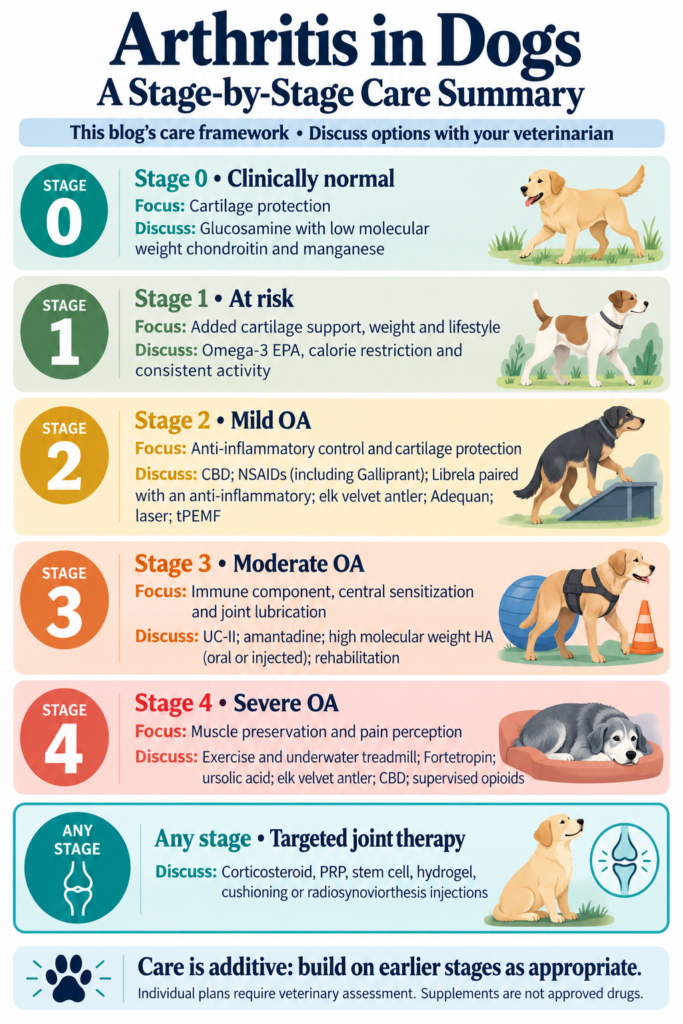
In summary, here is the whole approach on one page. Remember that it is additive: each stage keeps what came before it.
Arthritis in Dogs: Treatment Focus by COAST Stage
Stage |
Focus |
Tools to Discuss With Your Veterinarian |
|---|---|---|
| 0 | Cartilage protection | Glucosamine with low molecular weight chondroitin and manganese |
| 1 | Added cartilage support, weight, and lifestyle | Omega-3 EPA, calorie restriction, consistent activity |
| 2 | Anti-inflammatory control and cartilage protection | CBD, NSAIDs (including Galliprant), Librela paired with an anti-inflammatory, elk velvet antler, Adequan, laser, tPEMF |
| 3 | Immune component, central sensitization, joint lubrication | UC-II, amantadine, high molecular weight HA (oral or injected), rehabilitation |
| 4 | Muscle preservation and pain perception | Exercise and underwater treadmill, Fortetropin, ursolic acid, elk velvet antler, CBD, supervised opioids |
| Any | Targeted joint therapy | Corticosteroid, PRP, stem cell, hydrogel, cushioning, or radiosynoviorthesis injections |
If you take one thing from this guide, let it be this: earlier treatment is always better. After all, the dogs I see doing best at twelve are usually the ones whose owners started at two.
9. How Peak Therapeutics Fits Into a Stage-Based Plan
Peak Therapeutics products are wellness supplements, not drugs, and they are designed to work alongside the care your veterinarian provides. With that in mind, here is where each one fits in the framework above.
Peak Therapeutics Products by COAST Stage
Product |
Where It Fits |
|---|---|
| Full-Spectrum CBD Oil for Dogs | Stage 2 onward, for joint comfort and mobility support, especially when NSAIDs are not desired or appropriate, or alongside them. Veterinarian-formulated, CO2-extracted, Colorado-grown hemp with batch-specific COAs. |
| Tru Benefits Omega Canine | Stage 1 onward, formulated around the EPA intake dogs need for joint and whole-body support. |
| PeakEVA (elk velvet antler) | Stage 2 onward, for joint comfort and muscle support. |
| Hyaflex (formulated by Hyalogic, marketed by Peak Therapeutics) | Stage 3 onward, oral high molecular weight HA for joint lubrication support. |
In 2025, a pharmacokinetic study funded by Peak Therapeutics and published in Frontiers in Veterinary Science characterized how dogs absorb and process a full-spectrum, CBD-dominant hemp product, adding scientific grounding to how we formulate.15
10. Frequently Asked Questions
Each answer below opens with a direct, self-contained response.
What is the best treatment for arthritis in dogs?In truth, there is no single bes
t treatment. The most effective approach matches care to the dog’s COAST stage and layers therapies over time: cartilage support, omega-3s, and weight control early; an anti-inflammatory such as CBD or an NSAID from Stage 2; then nervous system, joint lubrication, and muscle support as osteoarthritis progresses.
What are the stages of arthritis in dogs?
Veterinarians use the Canine OsteoArthritis Staging Tool (COAST), which runs from Stage 0 (clinically normal, no risk factors) through Stage 1 (at risk), Stage 2 (mild), Stage 3 (moderate), and Stage 4 (severe). The stage combines what owners see at home with the veterinarian’s exam, and it also guides what to add next.
Is CBD better than NSAIDs for dogs with arthritis?
CBD and NSAIDs fill different roles. On one hand, NSAIDs have far more research behind them and provide strong anti-inflammatory control. On the other hand, CBD has less data but a favorable safety profile, with no gastrointestinal ulceration or clinical kidney problems reported in published canine studies. I consider CBD first for many dogs, and it is a good choice when NSAIDs are not desired or appropriate.
Can CBD and NSAIDs be given together?
Yes, under your veterinarian’s guidance. In fact, CBD has been studied as part of multimodal regimens alongside conventional pain medications. Because CBD can influence the liver enzymes that process some drugs, your veterinarian should know about every product your dog takes and may recommend periodic bloodwork.
Can young dogs get arthritis?
Yes. In a 2024 study of dogs aged 8 months to 4 years, nearly 40% had radiographic osteoarthritis in at least one limb joint, and owners noticed signs in only about 30% of the dogs with clinical osteoarthritis. In addition, hip and elbow dysplasia and joint injuries often start the process early. How do I know if my dog has arthritis?
Watch for stiffness after rest, hesitation at stairs or car rides, shorter walks, lameness after play, licking a joint, and muscle loss over the hips. Because dogs hide chronic pain well, ask your veterinarian for an orthopedic exam, radiographs and COAST staging, even in young dogs.
Is Librela safe for dogs?
Librela is FDA-approved and helps many dogs with osteoarthritis pain. However, in December 2024 the FDA informed veterinarians of reported adverse events, including neurologic signs and increased thirst and urination. In my experience, problems are more common in older dogs with other conditions. Review your dog’s full history with your veterinarian, and consider pairing it with an anti-inflammatory.
Does weight loss help dogs with arthritis?
Yes, and it is one of the most effective tools owners control. In obese dogs with hip or elbow osteoarthritis, lameness improved measurably after about 6% weight loss. A practical start is feeding about 25% fewer calories and checking weight monthly with your veterinary team.
Are joint supplements for dogs worth it?
The right ones are. For example, omega-3 EPA has randomized controlled trial support in dogs with osteoarthritis, and glucosamine with low molecular weight chondroitin has supporting research for cartilage protection. Choose products with published data and verified content, and use them continuously as part of a staged plan rather than as a stand-alone fix.
Why is tramadol no longer recommended for dog arthritis?
Dogs convert little tramadol into the metabolite that provides most of its pain relief. In a controlled trial in dogs with chronic osteoarthritis, tramadol performed no better than placebo, while carprofen improved both gait measurements and owner pain scores. In contrast, other options control osteoarthritis pain more reliably.
Explore Peak Therapeutics Joint Comfort Support for Dogs
Veterinarian-formulated full-spectrum CBD oil, Tru Benefits Omega Canine, and PeakEVA elk velvet antler. Lab-tested and built to work alongside your veterinarian’s plan.
11. References
1–7
- Enomoto M, de Castro N, Hash J, et al. Prevalence of radiographic appendicular osteoarthritis and associated clinical signs in young dogs. Sci Rep. 2024;14(1):2827. doi:10.1038/s41598-024-52324-9
- Cachon T, Frykman O, Innes JF, et al. Face validity of a proposed tool for staging canine osteoarthritis: Canine OsteoArthritis Staging Tool (COAST). Vet J. 2018;235:1-8. doi:10.1016/j.tvjl.2018.02.017
- Cachon T, Frykman O, Innes JF, et al. COAST Development Group’s international consensus guidelines for the treatment of canine osteoarthritis. Front Vet Sci. 2023;10:1137888. doi:10.3389/fvets.2023.1137888
- Canapp SO Jr, McLaughlin RM Jr, Hoskinson JJ, et al. Scintigraphic evaluation of dogs with acute synovitis after treatment with glucosamine hydrochloride and chondroitin sulfate. Am J Vet Res. 1999;60(12):1552-1557.
- Mehler SJ, May LR, King C, Harris WS, Shah Z. A prospective, randomized, double blind, placebo-controlled evaluation of the effects of eicosapentaenoic acid and docosahexaenoic acid on the clinical signs and erythrocyte membrane polyunsaturated fatty acid concentrations in dogs with osteoarthritis. Prostaglandins Leukot Essent Fatty Acids. 2016;109:1-7. doi:10.1016/j.plefa.2016.03.015
- Fritsch DA, Allen TA, Dodd CE, et al. A multicenter study of the effect of dietary supplementation with fish oil omega-3 fatty acids on carprofen dosage in dogs with osteoarthritis. J Am Vet Med Assoc. 2010;236(5):535-539. doi:10.2460/javma.236.5.535
- Marshall WG, Hazewinkel HAW, Mullen D, De Meyer G, Baert K, Carmichael S. The effect of weight loss on lameness in obese dogs with osteoarthritis. Vet Res Commun. 2010;34(3):241-253. doi:10.1007/s11259-010-9348-7
8–14
- Lima TM, Santiago NR, Alves ECR, Chaves DSA, Visacri MB. Use of cannabis in the treatment of animals: a systematic review of randomized clinical trials. Anim Health Res Rev. 2022;23(1):25-38. doi:10.1017/S1466252321000189
- Gamble LJ, Boesch JM, Frye CW, et al. Pharmacokinetics, safety, and clinical efficacy of cannabidiol treatment in osteoarthritic dogs. Front Vet Sci. 2018;5:165. doi:10.3389/fvets.2018.00165
- Verrico CD, Wesson S, Konduri V, et al. A randomized, double-blind, placebo-controlled study of daily cannabidiol for the treatment of canine osteoarthritis pain. Pain. 2020;161(9):2191-2202. doi:10.1097/j.pain.0000000000001896
- Brioschi FA, Di Cesare F, Gioeni D, et al. Oral transmucosal cannabidiol oil formulation as part of a multimodal analgesic regimen: effects on pain relief and quality of life improvement in dogs affected by spontaneous osteoarthritis. Animals (Basel). 2020;10(9):1505. doi:10.3390/ani10091505
- Amato R, Pacifico E, Lotito D, et al. Effects of a cannabinoid-based phytocomplex (Pain Relief) on chronic pain in osteoarthritic dogs. Animals (Basel). 2025;15(1):101. doi:10.3390/ani15010101
- Mejia S, Duerr FM, Griffenhagen G, McGrath S. Evaluation of the effect of cannabidiol on naturally occurring osteoarthritis-associated pain: a pilot study in dogs. J Am Anim Hosp Assoc. 2021;57(2):81-90. doi:10.5326/JAAHA-MS-7119
- Bradley S, Young S, Bakke AM, et al. Long-term daily feeding of cannabidiol is well-tolerated by healthy dogs. Front Vet Sci. 2022;9:977457. doi:10.3389/fvets.2022.977457
15–21
- Kitts-Morgan SE, Sams RA, Muir WW. Pharmacokinetics of cannabidiol, (-)-trans-Δ9-tetrahydrocannabinol, and their oxidative metabolites after intravenous and oral administration of a cannabidiol-dominant full-spectrum hemp product to beagle dogs. Front Vet Sci. 2025;12:1556975. doi:10.3389/fvets.2025.1556975
- Budsberg SC, Torres BT, Kleine SA, et al. Lack of effectiveness of tramadol hydrochloride for the treatment of pain and joint dysfunction in dogs with chronic osteoarthritis. J Am Vet Med Assoc. 2018;252(4):427-432. doi:10.2460/javma.252.4.427
- Rausch-Derra L, Huebner M, Wofford J, Rhodes L. A prospective, randomized, masked, placebo-controlled multisite clinical study of grapiprant, an EP4 prostaglandin receptor antagonist (PRA), in dogs with osteoarthritis. J Vet Intern Med. 2016;30(3):756-763. doi:10.1111/jvim.13948
- Monteiro-Steagall BP, Steagall PVM, Lascelles BDX. Systematic review of nonsteroidal anti-inflammatory drug-induced adverse effects in dogs. J Vet Intern Med. 2013;27(5):1011-1019. doi:10.1111/jvim.12127
- Corral MJ, Moyaert H, Fernandes T, et al. A prospective, randomized, blinded, placebo-controlled multisite clinical study of bedinvetmab, a canine monoclonal antibody targeting nerve growth factor, in dogs with osteoarthritis. Vet Anaesth Analg. 2021;48(6):943-955. doi:10.1016/j.vaa.2021.08.001
- US FDA Center for Veterinary Medicine. Dear Veterinarian letter notifying veterinarians about adverse events reported in dogs treated with Librela (bedinvetmab injection). Published December 16, 2024. Accessed October 10, 2026. https://www.fda.gov/animal-veterinary/product-safety-information/dear-veterinarian-letter-notifying-veterinarians-about-adverse-events-reported-dogs-treated-librela
- Carrino JA, McAlindon TE, Schnitzer TJ, et al. Characterization of adverse joint outcomes in patients with osteoarthritis treated with subcutaneous tanezumab. Osteoarthritis Cartilage. 2023;31(12):1612-1626. doi:10.1016/j.joca.2023.08.010
22–27
- Moreau M, Dupuis J, Bonneau NH, Lécuyer M. Clinical evaluation of a powder of quality elk velvet antler for the treatment of osteoarthrosis in dogs. Can Vet J. 2004;45(2):133-139.
- Gaynor JS, Muir WW, eds. Handbook of Veterinary Pain Management. 3rd ed. Mosby/Elsevier; 2015.
- Lascelles BDX, Gaynor JS, Smith ES, et al. Amantadine in a multimodal analgesic regimen for alleviation of refractory osteoarthritis pain in dogs. J Vet Intern Med. 2008;22(1):53-59. doi:10.1111/j.1939-1676.2007.0014.x
- Hetrick K, Harkin KR, Roush JK. Evaluation of Fortetropin in geriatric and senior dogs with reduced mobility. Can Vet J. 2022;63(10):1057-1060.
- Ebert SM, Nicolas CS, Schreiber P, et al. Ursolic acid induces beneficial changes in skeletal muscle mRNA expression and increases exercise participation and performance in dogs with age-related muscle atrophy. Animals (Basel). 2024;14(2):186. doi:10.3390/ani14020186
- Donecker J, Fabiani M, Gaschen L, Aulakh KS. Treatment response in dogs with naturally occurring grade 3 elbow osteoarthritis following intra-articular injection of 117mSn (tin) colloid. PLoS One. 2021;16(7):e0254613. doi:10.1371/journal.pone.0254613
12. About Dr. James S. Gaynor, DVM, MS, DACVAA
 Dr. James S. Gaynor is a board-certified veterinary specialist in anesthesia and pain management, a Diplomate of the American College of Veterinary Anesthesia and Analgesia, and Chief Medical Officer of Peak Therapeutics. He co-edited Cannabis Therapy in Veterinary Medicine: A Complete Guide (Springer, 2021) and the Handbook of Veterinary Pain Management, and has more than three decades of clinical and academic experience in osteoarthritis and chronic pain management.
Education
- BA, Biology, The Colorado College, Colorado Springs, CO, 1983
- DVM, The Ohio State University, Columbus, OH, 1988
- Anesthesiology Residency and MS (Cardiac Physiology), The Ohio State University, Columbus, OH, 1992
Board Certifications and Credentials
- Diplomate, American College of Veterinary Anesthesia and Analgesia (DACVAA), 1993
- Certified, International Veterinary Acupuncture Society, 1999
- Board Certified, Academy of Integrative Pain Management, 2004
- Certified Veterinary Pain Practitioner, International Veterinary Academy of Pain Management, 2011
- Certified CBD Consultant, Cannabinoid Medicine Studies, 2020
Academic and Clinical Career
- Assistant/Associate Professor and Section Head of Anesthesiology, Colorado State University College of Veterinary Medicine, 1992 to 2003
- Medical Director and Staff Anesthesiologist, Peak Performance Veterinary Group, Frisco, CO, 2004 to 2021
- Medical Director and Staff Anesthesiologist, Colorado Animal Specialty and Emergency, Boulder, CO, 2021 to 2026
- Staff Anesthesiologist, Buffalo Mountain Animal Hospital, Dillon, CO, 2026 to present
- Medical Director and Staff Anesthesiologist, Black Dog Veterinary Anesthesia Services, Breckenridge, CO, 2026 to present
- Associate Editor, Frontiers in Veterinary Science, 2025 to present
Published Books
- Cannabis Therapy in Veterinary Medicine: A Complete Guide, Co-editor and Author (Springer, 2021)
- Handbook of Veterinary Pain Management, 3rd Edition, Lead Editor and Author (Mosby/Elsevier, 2015)
© 2026 Peak Therapeutics | Authored by Dr. James S. Gaynor, DVM, MS, DACVAA | peaktherapeutics.net
This article is for educational and informational purposes only and is not a substitute for an examination by a licensed veterinarian. Prescription medications discussed here should be used only under veterinary direction. Peak Therapeutics products are wellness supplements and are not intended to diagnose, treat, cure, or prevent any disease.
Consult a licensed veterinarian before starting any joint, cannabinoid, or wellness protocol for your dog. All Peak Therapeutics hemp products contain less than 0.3% THC by dry weight.
Recent Comments