
As veterinary cannabinoid science matures, equine practitioners are increasingly fielding questions from horse owners about CBD for horses — and in many cases, incorporating CBD into multimodal equine wellness protocols themselves. The scientific foundation for this interest is real: the equine endocannabinoid system (ECS) has been confirmed, cannabinoid receptor distribution in equine tissues has been characterized, and the first equine-specific pharmacokinetic data on CBD for horses is now published in peer-reviewed literature. Specifically, this guide covers the biological mechanism underlying equine cannabinoid therapy, the published pharmacokinetic and safety data, practical dosing and administration guidance, and the clinical rationale for integrating CBD for horses into a multimodal equine wellness protocol.
Key Takeaways — CBD for Horses
- The equine endocannabinoid system (ECS) has been confirmed and characterized, providing a rational pharmacological basis for equine cannabinoid therapy.
- CBD works through indirect ECS modulation — supporting comfort, calm, and recovery without intoxication or ataxia.
- Peer-reviewed equine pharmacokinetic data (Williams et al., 2022) supports oral CBD administration at equine-appropriate doses.
- Clinical applications include joint comfort, behavioral calming, post-exertion recovery, GI balance, and senior horse wellness.
- CBD for horses is most effective as one component of a multimodal protocol — not a standalone intervention.
- Start dosing conservatively (100–200mg daily for average horses) and titrate based on individual response over 2–4 weeks.
In This Article
- The Equine Endocannabinoid System: Why CBD for Horses Has a Rational Pharmacological Basis
- How CBD Works in Horses: Mechanism of Action
- CBD for Horses — Equine Pharmacokinetics: What the Published Data Shows
- CBD for Horses: Clinical Applications in Comfort, Calm & Recovery
- Integrating CBD for Horses into Multimodal Equine Wellness Protocols
- CBD for Horses vs. Conventional Equine Calming and Comfort Agents
- CBD Dosage for Horses: Clinical Guidelines and Practical Considerations
- A Brief History: Cannabis and CBD in Equine Medicine
- Peak Therapeutics Equine CBD: The Complete Horse CBD Line
- Frequently Asked Questions — CBD for Horses
- References
- About Dr. James S. Gaynor, DVM, MS, DACVAA
The Equine Endocannabinoid System: Why CBD for Horses Has a Rational Pharmacological Basis
 The endocannabinoid system (ECS) is a lipid-based retrograde signaling network present in all vertebrates. First characterized in mammals in the early 1990s, the ECS has since been confirmed across virtually all vertebrate species examined — including horses. Because of this, understanding its architecture is foundational to understanding why equine CBD therapy has a rational pharmacological basis, rather than being a wellness trend without mechanistic grounding.
Specifically, the equine ECS consists of three primary components: endogenous cannabinoid ligands (principally anandamide and 2-arachidonoylglycerol), two primary receptor populations (CB1 and CB2), and the metabolic enzymes (FAAH and MAGL) that regulate ligand synthesis and degradation. A 2024 comparative review across the major species of veterinary interest — dogs, cats, and horses — confirmed that this ECS architecture is conserved across these species, with species-specific differences in receptor distribution and cannabinoid metabolism that have direct implications for dosing and formulation.
ECS Table
ECSComponent |
Distribution & Function in Horses |
|---|---|
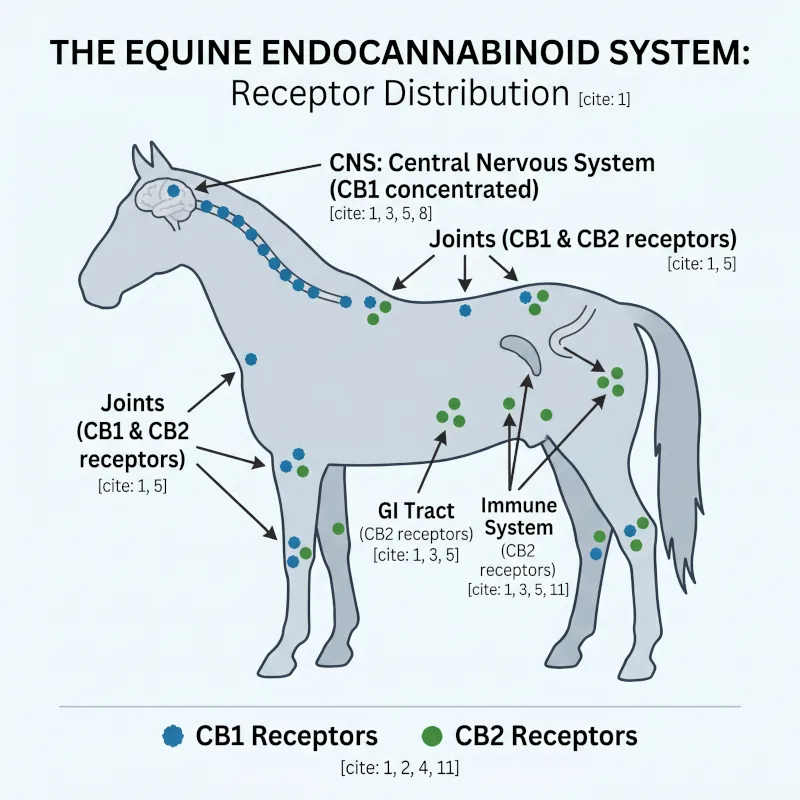
| CB1 Receptors | Concentrated in the central nervous system — cerebral cortex, hippocampus, cerebellum, and spinal cord — where they modulate nociceptive signaling, emotional regulation, motor coordination, and autonomic function. Also present in peripheral nerve terminals and selected peripheral tissues. |
| CB2 Receptors | Predominantly distributed across immune tissues, peripheral organs, and the gastrointestinal tract. These receptors regulate inflammatory cytokine release, immune cell migration, and the inflammatory response at sites of tissue injury. Notably, CB2 receptor expression increases substantially at sites of chronic inflammation. |
| Anandamide (AEA) | Endogenous partial agonist of CB1 and CB2 receptors. Synthesized on demand at the synapse; regulates retrograde signaling. Involved in nociceptive modulation, emotional tone, and appetite. Rapidly degraded by FAAH. |
| 2-AG | 2-Arachidonoylglycerol — a full agonist at both CB1 and CB2 receptors. This is the most abundant endocannabinoid. It plays a key role in synaptic plasticity and inflammatory resolution. Degraded primarily by MAGL. |
| FAAH / MAGL | Fatty acid amide hydrolase (FAAH) and monoacylglycerol lipase (MAGL) regulate the duration and intensity of endocannabinoid signaling by controlling ligand degradation. In particular, CBD inhibits FAAH, which may partially explain its effects on anandamide availability. |
In horses specifically, CB1 and CB2 receptors have been identified in joint synovium, cartilage, periarticular tissues, immune cells, the gastrointestinal tract, and central nervous system structures governing nociception and stress response. As a result, this receptor distribution maps directly onto the clinical areas where equine CBD has shown the most consistent benefit: comfort support, behavioral calm, gastrointestinal function, and post-exertion recovery — the same systems that horse owners and veterinarians are most often trying to address with equine CBD oil.
How CBD Works in Horses: Mechanism of Action
Understanding how CBD works in horses begins with understanding what separates it mechanistically from THC. In short, THC acts as a direct agonist at CB1 receptors to produce intoxication. CBD for horses, on the other hand, engages the ECS through indirect, modulatory pathways — producing meaningful physiological effects without the psychomotor impairment, ataxia, or behavioral dysregulation associated with direct CB1 agonism. For this reason, this mechanistic distinction is clinically significant and is the pharmacological reason equine CBD oil can be used safely across all categories of equine management.
CBD’s Primary Mechanisms
Relevant to equine clinical use include:
Mechanism |
Clinical Relevance in Horses |
|---|---|
| Indirect ECS modulation | CBD acts as a negative allosteric modulator at CB1 receptors and modulates CB2 signaling — altering receptor activity without directly activating them. Consequently, this prevents endocannabinoid overstimulation while still producing regulatory effects. |
| FAAH inhibition | CBD inhibits fatty acid amide hydrolase (FAAH), the primary enzyme responsible for anandamide degradation. As a result, this increases anandamide availability at CB1 and CB2 receptors, amplifying endogenous ECS signaling without directly introducing an exogenous CB1 agonist. |
| TRPV1 modulation | CBD activates and then desensitizes transient receptor potential vanilloid 1 (TRPV1) channels — involved in nociceptive signaling, inflammation, and thermoregulation. Therefore, this mechanism is relevant to comfort and inflammatory response modulation in equine practice. |
| Serotonin receptor interaction | CBD shows activity at 5-HT1A serotonin receptors, which may contribute to its calming and nervine-adjacent effects — clinically relevant for horses with stress-driven behaviors and heightened nervous system reactivity. |
| Anti-inflammatory pathways | CBD modulates multiple inflammatory signaling pathways including NF-kB and MAPK cascades, reducing pro-inflammatory cytokine production. Additionally, CB2 receptor activation at sites of tissue injury contributes to this effect. |
The full-spectrum formulation used in Peak Therapeutics equine CBD preserves the complete cannabinoid and terpene profile of the hemp plant, enabling the entourage effect — the well-documented finding that multiple cannabinoids and terpenes working together produce greater combined biological activity than isolated CBD alone. In other words, this is the pharmacological rationale for using full-spectrum rather than isolate-based equine CBD products.
CBD for Horses — Equine Pharmacokinetics: What the Published Data Shows
Equine-specific pharmacokinetic data is limited but growing. For this reason, veterinary practitioners making evidence-based decisions about CBD dosage for horses should be aware of what the current literature does and does not establish.
The most directly relevant published study to date on equine CBD is Williams et al. (2022), which evaluated the pharmacokinetic profile of multiple doses of an orally administered CBD product formulated specifically for horses. Below are the key findings relevant to clinical practice:
Featured Research: Equine Cannabinoid Pharmacokinetics
Study: Williams MR, Holbrook TC, Maxwell L, Croft CH, Ientile MM, Cliburn K. Pharmacokinetic evaluation of a cannabidiol supplement in horses. J Equine Vet Sci. 2022;110:103842. doi:10.1016/j.jevs.2021.103842
Design: Randomized 2-way crossover. Seven horses received 0.35 or 2.0 mg/kg CBD orally every 24 hours for 7 total doses, with a 2-week washout between treatments.
Key findings: CBD was detectable in equine plasma following oral administration at both doses. At 0.35 mg/kg: Cmax 6.6 ng/mL, Tmax 1.8 hours. At 2.0 mg/kg: higher dose-dependent plasma concentrations. Meanwhile, oral bioavailability was variable — consistent with CBD pharmacokinetics across other species.
Safety: The study evaluated a CBD product formulated specifically for horses. Findings support oral CBD administration as a viable route in equine patients.
Implication: Practitioners should therefore start at the lower end of the dose range and titrate based on individual response. Oral bioavailability is enhanced by co-administration with dietary lipids.
Limitation: Equine-specific CBD pharmacokinetic data remains limited overall. Because this study used a product formulated for horses, extrapolation from canine or human data requires caution.
For context, the broader CBD pharmacokinetic literature across veterinary species — including a 2025 study in dogs co-funded by Peak Therapeutics and published in Frontiers in Veterinary Science — consistently identifies oral bioavailability as the primary pharmacokinetic variable requiring species-specific optimization. Specifically, oral CBD bioavailability is generally lower than parenteral routes across species, highly dependent on lipid content of the co-administered feed, and subject to significant individual variation. These findings consequently reinforce the clinical value of starting at lower doses and titrating based on individual equine response.
Drug Interaction Considerations for Equine Practitioners
CBD is metabolized via cytochrome P450 enzymes (primarily CYP3A4 and CYP2C9 in humans; species-specific data in horses remains limited). Because of this, veterinarians should exercise appropriate caution when co-administering CBD with drugs that share these metabolic pathways — particularly NSAIDs, sedatives, anticonvulsants, and macrolide antibiotics. As with any nutraceutical, co-administration with hepatically metabolized pharmaceuticals warrants monitoring of clinical response and, where appropriate, relevant clinicopathologic parameters.
CBD for Horses: Clinical Applications in Comfort, Calm & Recovery
Based on the biological rationale established in the sections above and the clinical experience of practitioners working with equine CBD, the following areas represent the most evidence-supported applications in equine practice. Above all, Dr. Gaynor emphasizes that CBD for horses should be positioned as a component of a multimodal protocol — not a standalone intervention or a replacement for conventional veterinary diagnosis and treatment.
Application and Evidence Table
Below is a table of the clinical applications and evidence basis findings:
Clinical Application |
Evidence Basis & Practical Notes |
|---|---|
| CBD for horse joint health | CB1 and CB2 receptors in synovium, cartilage, and periarticular tissues provide a mechanistic basis for CBD’s role in comfort support at the joint level. This is particularly relevant for senior horses, performance horses with high training loads, and post-surgical recovery protocols. Peak Therapeutics Equine CBD (full-spectrum) and Horse CBD Chews are both appropriate for daily joint wellness support. However, CBD complements — does not replace — structural approaches (glucosamine, hyaluronic acid, PRP). |
| CBD for horse calming | CBD’s activity at serotonin receptors (5-HT1A) and its modulation of the stress axis via CB1 receptor signaling in limbic structures supports its use for stress-driven equine behaviors: trailering stress, pre-competition nervousness, farrier and veterinary visit reactivity, and herd dynamic changes. Peak Therapeutics Equine CBD + CBG is specifically formulated for calming support — CBG engages CB1 and CB2 receptors directly, amplifying the calm response. Importantly, this produces balanced nervous system support without sedation or ataxia. It is therefore well-suited for nervous horses, reactive horses, and horses with generally high stress responsivity. |
| Post-exertion recovery | CB2 receptor-mediated anti-inflammatory activity and the entourage effect of full-spectrum hemp may support resolution of exercise-induced inflammatory signaling and tissue repair processes following training and competition. For this reason, Peak Therapeutics Equine CBD (full-spectrum) is well-suited for daily recovery support in performance horses in active competition seasons. |
| Gastrointestinal balance | ECS receptor expression throughout the equine gastrointestinal tract provides a mechanistic basis for the growing clinical interest in CBD for equine gut health. In fact, regulation of gut motility, visceral comfort, and mucosal immune response are all ECS-mediated functions. Formal equine GI trials are limited but emerging. |
| CBD for senior horses | Senior horses present the full spectrum of age-related ECS dysregulation: reduced joint mobility, altered sleep architecture, immune dysregulation, and muscle loss. Consequently, CBD for senior horses as part of a comprehensive wellness protocol addresses multiple ECS-dependent systems simultaneously. Peak Therapeutics Equine CBD + CBN is particularly relevant for senior horses with sleep disruption or nighttime restlessness — CBN is the cannabinoid most associated with relaxation and sleep support through ECS interaction. |
Integrating CBD for Horses into Multimodal Equine Wellness Protocols
The most clinically productive framework for equine CBD is not as a singular intervention but as one component of a multimodal approach. In practice, this mirrors the philosophy that has driven evidence-based pain management and integrative veterinary medicine for the past three decades — and it is the philosophy that informs Dr. Gaynor’s clinical recommendations for equine CBD oil use.
Multimodal Equine Wellness Protocols
Incorporating cannabinoid therapy typically combine:
Protocol Component |
Role in Multimodal Equine Wellness |
|---|---|
| Structural joint support | Glucosamine, chondroitin, hyaluronic acid — addresses cartilage matrix, synovial fluid viscosity, and connective tissue at the structural level. |
| CBD / full-spectrum hemp | Addresses ECS-mediated inflammatory signaling, nociceptive modulation, and nervous system balance at the receptor level. Because this targets a different mechanism, the benefit is synergistic. |
| Physical rehabilitation | Targeted exercise protocols, controlled movement, hydrotherapy where available — maintains muscle mass and joint range of motion. |
| Conventional pharmacology | NSAIDs, corticosteroids, or other veterinarian-prescribed agents where clinically indicated — not replaced by CBD, but potentially reduced in dose or frequency when multimodal support is established. |
| Nutritional optimization | Species-appropriate nutrition, omega-3 fatty acid supplementation, and weight management — foundational to reducing metabolic inflammation and supporting overall recovery. |
The clinical goal of multimodal integration is to address equine wellness through multiple, complementary biological pathways — producing outcomes that exceed what any single intervention can achieve alone. To that end, Peak Therapeutics CBD for horses is designed to occupy the ECS component of this protocol with a veterinarian-formulated, full-spectrum equine CBD oil built to the same evidence standards applied to our canine and feline formulations.
CBD for Horses vs. Conventional Equine Calming and Comfort Agents
Veterinarians and horse owners comparing equine CBD to conventional options should understand both the mechanistic differences and the practical clinical distinctions. For most horses, CBD represents a complementary rather than competing approach — one that fills the daily, non-sedating management gap that conventional agents cannot safely occupy.
Agent |
Clinical Profile & Comparison to CBD |
|---|---|
| CBD (cannabinoid therapy) | Non-sedating. Works through ECS modulation to support calm without ataxia or performance impairment. Effects develop over 30–60 minutes for acute use; 2–4 weeks for full systemic benefit with consistent daily use. No withdrawal. No regulatory status as a controlled substance. However, competition rules vary — verify with governing body. |
| Acepromazine | Phenothiazine sedative/tranquilizer. Provides reliable sedation but is associated with ataxia, hypotension, and penile prolapse risk in male horses. Additionally, there are significant competition regulatory restrictions. Not appropriate for daily maintenance use. |
| Alpha-2 agonists (detomidine, romifidine) | Potent sedation, analgesia — short duration. Cardiovascular depression at clinical doses. Not suitable for daily supplementation or owner-administered management. |
| NSAIDs (phenylbutazone, flunixin) | Anti-inflammatory and comfort-supporting. Risk of GI ulceration with long-term use. Appropriate for acute comfort support; meanwhile, CBD addresses different pathways and may reduce reliance on chronic NSAID administration. |
| Magnesium / herbal calmers | Commonly used by horse owners as natural calming supplements. Limited peer-reviewed evidence. Some overlap with CBD in targeting behavioral calm — yet CBD has a more established mechanistic basis through ECS receptor pharmacology. |
CBD Dosage for Horses: Clinical Guidelines and Practical Considerations
CBD dosage for horses in veterinary practice is currently based on clinical experience, extrapolation from small animal data, and the limited equine pharmacokinetic literature available. Given the documented variability in oral CBD bioavailability across species, dose titration based on individual clinical response is essential — fixed population-level dosing is unlikely to be optimal for any individual horse. Therefore, Dr. Gaynor recommends treating CBD dosage for horses with the same individualized approach applied to any equine nutraceutical or pharmaceutical intervention.
Starting Dose Framework
The following represents a conservative clinical starting framework based on body weight. Begin at the lower end of the range, assess response over 2–4 weeks of consistent daily administration before dose adjustment, and always account for concurrent medications and underlying health conditions.
Body Weight Class |
Starting Daily CBD Dose |
|---|---|
| Small horse or pony (< 500 lbs) | 100–200mg CBD daily, divided into morning and evening administration |
| Average horse (500–1,000 lbs) | 100–200mg CBD daily, divided into morning and evening administration |
| Large horse (1,000–1,500 lbs) | 200–300mg CBD daily, divided into morning and evening administration |
| Draft horse (> 1,500 lbs) | 250–400mg CBD daily, divided into morning and evening administration |
***All CBD administration should be monitored closely and used in conjunction with veterinary supervision ***
For acute calming applications — trailering, competition, veterinary procedures — administer 30–60 minutes prior to the anticipated stressor. Higher single doses may be appropriate for acute events than the baseline daily maintenance dose; assess individual tolerance before high-stakes situations. Similarly, for nervous horses, reactive horses, or horses with pronounced stress responsivity, the Peak Therapeutics CBD + CBG formula is specifically designed for calming support — CBG interacts directly with both CB1 and CB2 receptors and works synergistically with CBD to support a balanced, non-sedating calm response. As a result, many horse owners and trainers use CBD + CBG as their go-to natural horse calming supplement for trailering and competition situations.
Administration Considerations for Equine Practitioners
Lipid co-administration: Oral CBD bioavailability is enhanced by co-administration with dietary lipids. In practice, mixing equine CBD oil into grain or a lipid-containing feed improves absorption — clinically relevant for ensuring consistent plasma levels.
Consistent timing: Once-daily versus twice-daily administration — split dosing produces more stable plasma concentrations and is therefore preferred for comfort and recovery applications.
Drug interaction monitoring: For horses on concurrent NSAIDs, sedatives, or other hepatically metabolized agents — monitor for altered drug effect, because CBD may inhibit CYP450 metabolism of co-administered pharmaceuticals.
Baseline and follow-up clinical assessment: Document initial comfort and behavioral scores before initiating CBD therapy and reassess at 2 and 4 weeks. This enables objective evaluation of clinical response.
Competition considerations: Verify governing body regulations before use. Cannabinoids may be detectable for variable periods after administration. The Williams et al. (2022) pharmacokinetic data provides relevant clearance context for equine-specific dosing decisions.
A Brief History: Cannabis and CBD in Equine Medicine
Era |
Development |
|---|---|
| ~300 BC | Ancient Roman Veterinary Texts — First Documented Equine Use. Roman agricultural and veterinary manuscripts describe hemp-based preparations administered to horses for digestive discomfort and physical tension. These are among the earliest recorded examples of cannabinoid use in a veterinary context. |
| 1800s | Cannabis Enters Formal Western Veterinary Practice. Cannabis tinctures were a standard component of the 19th-century veterinary pharmacopeia in Europe and North America. Veterinarians routinely employed them for horses and livestock — observations that preceded the discovery of the ECS by nearly a century. |
| 1990s | Discovery & Characterization of the Endocannabinoid System. The identification of CB1 (1990) and CB2 (1993) receptors, followed by the isolation of endogenous cannabinoid ligands, provided the molecular framework for understanding why cannabis preparations produced the effects that veterinarians had empirically observed for generations. |
| 2018 | Farm Bill — Federal Legalization of Hemp-Derived CBD. The Agriculture Improvement Act removed hemp from the Controlled Substances Act, thereby enabling research and commercial development of veterinary-grade hemp CBD products for horses and other species. |
| 2021 | Definitive Academic Reference Published. Cannabis Therapy in Veterinary Medicine: A Complete Guide (Springer), co-edited by Dr. Gaynor, is published — the first peer-reviewed academic text on veterinary cannabinoid medicine, including a dedicated equine chapter covering ECS biology, pharmacokinetics, and clinical practice. |
| 2022 | Key Equine CBD Pharmacokinetic Study Published. Williams et al. publish a peer-reviewed pharmacokinetic evaluation of a CBD supplement formulated specifically for horses in the Journal of Equine Veterinary Science — providing practitioners with objective equine-specific data on oral CBD bioavailability, plasma concentrations, and dosing. |
| Present | Equine Cannabinoid Research Continues to Expand. Veterinary researchers at multiple institutions are investigating CBD’s role in equine comfort, behavioral calm, gastrointestinal health, and performance recovery. The evidence base is growing; the mechanistic rationale is established. |
Peak Therapeutics Equine CBD: The Complete Horse CBD Line
Peak Therapeutics was founded on the principle that veterinary nutraceuticals should be held to the same evidence standards as pharmaceutical interventions. Accordingly, every product in the Peak Therapeutics horse CBD line is veterinarian-formulated by Dr. Gaynor, CO2-extracted, full-spectrum, and independently third-party lab tested. The equine line includes four targeted formulations — whether you are looking for the best CBD for horses for daily wellness, a natural horse calming supplement for nervous or reactive horses, sleep support for nighttime restlessness, or a treat-based format, each product is designed for a specific clinical need.
Prodcut & Formulation Table
Product |
Formulation & Clinical Use |
|---|---|
| Equine CBD (Full-Spectrum) | The foundation of the Peak Therapeutics horse CBD line. Full-spectrum, CO2-extracted hemp oil formulated at equine-appropriate concentrations for daily wellness support, overall comfort, and whole-body ECS balance. Suitable as a daily maintenance supplement for horses of all ages. |
| Equine CBD + CBG (Calming) | Combines full-spectrum CBD with cannabigerol (CBG) — the “precursor cannabinoid” that interacts directly with both CB1 and CB2 receptors. Specifically formulated for nervous horses, reactive horses, and horses with stress-driven behaviors: trailering stress, pre-competition nervousness, reactive temperaments, farrier visits, and environmental changes. This natural horse calming supplement produces calm without sedation. It is therefore ideal for horse owners looking for CBD for horse calming support. |
| Equine CBD + CBN (Sleep Support) | Combines full-spectrum CBD with cannabinol (CBN), the cannabinoid most closely associated with relaxation and sleep support through ECS interaction. Formulated for horses with sleep disruption, nighttime restlessness, or recovery situations where quality rest is a clinical priority. |
| Horse CBD Chews | Full-spectrum equine CBD in a convenient chew format — ideal for horses that resist liquid supplementation or for owners who prefer a precise, treat-based delivery method. Uses the same CO2-extracted full-spectrum hemp oil as the liquid formulations, in a dose-consistent format horses readily accept. |
Explore the full Peak Therapeutics horse CBD line — including certificates of analysis for every batch — at peaktherapeutics.net.
Equine CBD + CBG (Calming Formula)
Equine CBD + CBN (Sleep Support Formula)
Horse CBD Chews
Quality Standards Across All Products
Veterinarian-Formulated: Developed by Dr. James S. Gaynor, DACVAA — co-editor of the definitive academic textbook on veterinary cannabinoid medicine. Every formulation reflects clinical evidence standards, not marketing logic.
Full-Spectrum CO2 Extraction: Preserves the complete cannabinoid and terpene matrix, enabling the entourage effect. CO2 extraction is the gold standard for solvent-free, high-integrity hemp extracts.
Third-Party Lab Tested: Every batch independently analyzed for cannabinoid potency, heavy metals, pesticide residues, and THC compliance. Certificates of analysis available at peaktherapeutics.net.
Confirmed < 0.3% THC: All products verified hemp-derived and batch-tested to confirm THC content below the federal threshold — non-intoxicating and legally compliant for equine use.
Species-Appropriate Concentration: Equine formulations require substantially higher cannabinoid concentrations than small-animal products. For this reason, every product in the horse CBD line is built for horses — not adapted from a canine formula.
Frequently Asked Questions — CBD for Horses
Is CBD safe for horses?
Based on current evidence, equine CBD is considered safe at therapeutic doses when sourced from quality hemp (< 0.3% THC). Williams et al. (2022) published a peer-reviewed pharmacokinetic evaluation of a CBD supplement formulated specifically for horses, finding oral CBD administration viable at equine-appropriate doses. For long-term use, periodic monitoring of hepatic parameters is reasonable — elevated liver enzymes have been observed in some equine CBD studies, though these normalized after dosing ended. Always consult a licensed veterinarian before initiating any CBD protocol, particularly for horses on concurrent medications.
How does CBD work in horses?
CBD works in horses through the endocannabinoid system (ECS) — a receptor network present in all mammals. CBD oil for horses interacts primarily with CB1 and CB2 receptors distributed throughout the equine nervous system, immune tissues, gastrointestinal tract, and joints. Unlike THC, CBD does not directly activate CB1 receptors; instead it modulates receptor activity, inhibits endocannabinoid degradation via FAAH inhibition, and engages secondary targets including TRPV1 and 5-HT1A receptors. The result is meaningful physiological activity across multiple biological pathways without intoxication or ataxia.
What is the correct CBD dosage for horses?
A conservative clinical starting framework based on body weight: 100–200mg CBD daily for average horses (500–1,000 lbs), 200–300mg for large horses (1,000–1,500 lbs), divided into morning and evening administration. For draft horses over 1,500 lbs, 250–400mg daily under veterinary guidance. Always start at the lower end and titrate based on individual response over 2–4 weeks. Put simply, CBD dosage for horses should be individualized — oral bioavailability varies significantly between animals and is enhanced by co-administration with dietary lipids.
Can horses take CBD alongside other supplements or medications?
Equine CBD is generally well tolerated alongside most equine supplements. However, CBD inhibits cytochrome P450 enzymes, which may alter the metabolism of co-administered hepatically cleared drugs — particularly NSAIDs, sedatives, alpha-2 agonists, macrolide antibiotics, and anticonvulsants. In horses on chronic pharmaceutical regimens, initiate CBD at conservative doses and monitor clinical response. Discuss all concurrent supplements and medications with your veterinarian before starting CBD for horses.
Can equine CBD be used before competitions?
This requires case-by-case assessment. Hemp-derived CBD for horses contains < 0.3% THC, but cannabinoid metabolites may be detectable in equine plasma, urine, or hair for variable durations following administration. Equestrian governing bodies vary significantly — some prohibit any detectable cannabinoid, others have established threshold levels. Veterinarians should therefore review relevant governing body regulations for each horse’s discipline and consult equine-specific pharmacokinetic data such as Williams et al. (2022) before advising on competition use.
Which CBD product is best for nervous horses, trailering stress, or pre-competition situations?
For nervous horses, reactive horses, and horses that experience heightened stress responsivity during trailering, farrier visits, veterinary procedures, or competition environments, Peak Therapeutics Equine CBD + CBG is the most targeted formulation. CBG (cannabigerol) engages CB1 and CB2 receptors directly, working synergistically with CBD to support a balanced, non-sedating calm response through the endocannabinoid system — without dulling the horse’s natural awareness or performance. Administer 30–60 minutes before the anticipated stressor. For horses that need ongoing daily calming support, consistent daily use alongside as-needed dosing produces the most reliable outcomes.
What does the research show about CBD for horse joint health?
The mechanistic basis for CBD for horse joint health is well-established: CB1 and CB2 receptors are present in equine joint synovium, periarticular tissues, cartilage, and the peripheral nerve fibers involved in articular nociception. Through these receptors, ECS signaling modulates inflammatory cytokine release and nociceptive signal processing at the joint level. Formal equine RCT data is not yet published; however, the mechanistic rationale parallels the Cornell University 2018 randomized controlled trial in dogs, which demonstrated significant improvement in comfort scores and activity levels with CBD supplementation in confirmed osteoarthritis cases.
How should equine CBD fit into an overall equine wellness plan?
As one component of a multimodal protocol — not a standalone intervention. Equine CBD addresses the ECS dimension of comfort and inflammatory response. In particular, Dr. Gaynor recommends combining CBD oil with structural joint support (glucosamine, HA, PRP where indicated), appropriate physical management, and conventional pharmacology where clinically necessary. For many horses, consistent daily CBD administration at therapeutic doses reduces the frequency or dose of NSAIDs required — a clinically meaningful outcome that reduces cumulative GI ulceration risk over time.
What is the best CBD for senior horses?
For senior horses (typically > 18–20 years, or younger horses with age-related mobility challenges), 100–200mg CBD daily for average-weight horses is a good starting point, divided into morning and evening administration. Peak Therapeutics Equine CBD (full-spectrum) supports daily comfort and whole-body ECS balance, while Equine CBD + CBN is particularly suited for senior horses with sleep disruption or nighttime restlessness — CBN is the cannabinoid most closely associated with relaxation and sleep support through ECS interaction. Titrate based on clinical response at 2-week intervals, and combine with a comprehensive senior nutrition program for the most complete benefit.
References
Williams MR, Holbrook TC, Maxwell L, Croft CH, Ientile MM, Cliburn K. Pharmacokinetic evaluation of a cannabidiol supplement in horses. J Equine Vet Sci. 2022;110:103842. doi:10.1016/j.jevs.2021.103842 pubmed.ncbi.nlm.nih.gov/34923070/
Kitts-Morgan SE, et al. Pharmacokinetics of cannabidiol and metabolites after IV and oral administration of a full-spectrum hemp product to beagle dogs. Front Vet Sci. 2025;12. frontiersin.org/journals/veterinary-science/articles/10.3389/fvets.2025.1556975/full
Cital S, Kramer K, Hughston L, Gaynor JS (eds). Cannabis Therapy in Veterinary Medicine: A Complete Guide. Springer, 2021. Includes dedicated equine chapter. link.springer.com/book/10.1007/978-3-030-68317-7
Silver RJ. The Endocannabinoid System of Animals. Animals (Basel). 2019;9(9):686. Comprehensive review of ECS across vertebrate species. pubmed.ncbi.nlm.nih.gov/31527410/
Di Salvo A, et al. Endocannabinoid system and phytocannabinoids in the main species of veterinary interest: a comparative review. Vet Res Commun. 2024;48(5):2915–2941. pmc.ncbi.nlm.nih.gov/articles/PMC11442603/
Gamble LJ, et al. Pharmacokinetics, Safety, and Clinical Efficacy of Cannabidiol Treatment in Osteoarthritic Dogs. Front Vet Sci. 2018;5:165. frontiersin.org/journals/veterinary-science/articles/10.3389/fvets.2018.00165/full
Gaynor JS, Muir WW (eds). Handbook of Veterinary Pain Management, 3rd Edition. Mosby/Elsevier, 2015. shop.elsevier.com/books/handbook-of-veterinary-pain-management/gaynor/978-0-323-04679-4

About Dr. James S. Gaynor, DVM, MS, DACVAA
Education
- BA, Biology — The Colorado College, Colorado Springs, CO, 1983
- DVM — The Ohio State University, Columbus, OH, 1988
- Anesthesiology Residency & MS (Cardiac Physiology) — The Ohio State University, Columbus, OH, 1992
Board Certifications & Credentials
- Diplomate, American College of Veterinary Anesthesiologists (DACVAA), 1993
- Board Certified, Academy of Integrative Pain Management, 2004
- Certified, International Veterinary Acupuncture Society, 1999
- Certified Veterinary Pain Practitioner, International Veterinary Academy of Pain Management, 2011
- Certified CBD Consultant, Cannabinoid Medicine Studies, 2020
Academic & Clinical Career
- Assistant/Associate Professor & Section Head of Anesthesiology, Colorado State University College of Veterinary Medicine, 1992–2003
- Medical Director & Staff Anesthesiologist, Peak Performance Veterinary Group, Frisco, CO, 2004–2021
- Medical Director & Staff Anesthesiologist, Colorado Animal Specialty and Emergency, Boulder, CO, 2021–2026
- Staff Anesthesiologist, Buffalo Mountain Animal Hospital, Dillon, CO, 2026–present
- Medical Director & Staff Anesthesiologist, Black Dog Veterinary Anesthesia Services, Breckenridge, CO, 2026–present
- Associate Editor, Frontiers in Veterinary Sciences, 2025–present
Published Books
- Cannabis Therapy in Veterinary Medicine: A Complete Guide: Co-editor & Author (Springer, 2021) — the definitive peer-reviewed academic textbook on veterinary cannabinoid medicine across species, including a dedicated equine chapter. link.springer.com/book/10.1007/978-3-030-68317-7
- Handbook of Veterinary Pain Management, 3rd Edition: Lead Editor & Author (Mosby/Elsevier, 2015) — the gold-standard clinical reference for veterinary pain management practitioners. shop.elsevier.com/books/handbook-of-veterinary-pain-management/gaynor/978-0-323-04679-4
Equine CBD · CBD + CBG Calming · CBD + CBN Sleep Support · Horse CBD Chews — Veterinarian-formulated, third-party lab tested.
© 2026 Peak Therapeutics | Authored by Dr. James S. Gaynor, DVM, MS, DACVAA | peaktherapeutics.net
This article is for educational and informational purposes only and does not constitute veterinary medical advice. Consult a licensed veterinarian before initiating any cannabinoid therapy protocol. All products contain less than 0.3% THC by weight.
Recent Comments